
How to Appeal a Schengen Visa Refusal (Complete 2026 Guide)
Receiving a Schengen visa refusal can be frustrating, especially if you have already planned your trip, booked accommodation, or prepared documents to visit family, study, work or travel in Europe.
Understanding how to appeal a Schengen visa refusal is essential before deciding whether to submit an appeal or file a new visa application.
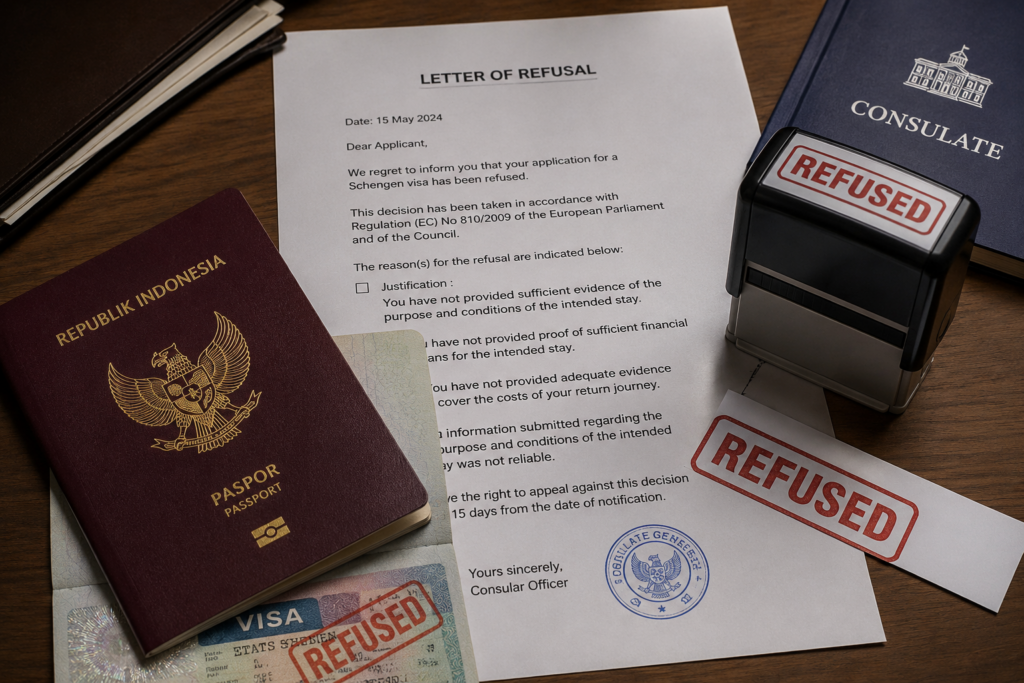
The good news is that a visa refusal does not always mean the end of the process. In many cases, you may have the right to appeal the decision. In other situations, submitting a stronger new visa application may be a faster, simpler and more effective solution.
This guide explains everything you need to know about how to appeal a Schengen visa refusal, including:
- What a Schengen visa refusal means;
- When it is worth filing an appeal;
- When submitting a new visa application is the better option;
- How appeal procedures differ across Schengen countries;
- Which documents are usually required;
- The most common mistakes to avoid after receiving a refusal.
One of the most important things to understand is that there is no single appeal procedure for all Schengen countries. A visa refused by Italy follows a different legal process from one refused by France, Germany, Spain, the Netherlands or any other Schengen Member State.
By the end of this guide, you will have a clear understanding of the appeal process, the main differences between Schengen countries and the steps you can take to improve your chances of success.
Related article: 10 Schengen Visa Mistakes That Can Lead to a Refusal (And How to Avoid Them).
Which Schengen Country Refused Your Visa?
The procedure for how to appeal a Schengen visa refusal depends entirely on the country that issued the refusal.
The appeal procedure depends on the Schengen country that refused your visa. A refusal issued by Italy does not follow the same appeal process as a refusal issued by France, Germany, Spain or the Netherlands.
| Visa refused by | Main procedure |
|---|---|
| Italy | Appeal before the Administrative Court |
| France | Appeal before the CRRV first |
| Germany | New application or judicial appeal |
| Spain | Administrative or judicial appeal |
| Netherlands | Administrative objection |
| Switzerland | Written objection |
| Belgium | Appeal before the competent immigration court |
What Does a Schengen Visa Refusal Mean?
A Schengen visa refusal does not necessarily mean that you will never be able to travel to Europe.
It simply means that, according to the consular authority that assessed your application, one or more legal requirements for issuing the visa were not sufficiently demonstrated.
The most common reasons include:
- Unclear purpose of travel.
- Incomplete documentation.
- Inconsistent information.
- Insufficient proof of financial means.
- Doubts about your intention to return to your country of residence.
- Inconsistent travel itinerary or insurance coverage.
- Previous visa refusals or immigration violations.
The first thing you should do is carefully read the refusal letter.
This document explains:
- why your visa was refused;
- which legal grounds were applied;
- whether you have the right to appeal;
- the deadline for filing an appeal;
- the authority responsible for reviewing your case.
Related article: Schengen Visa Documents: Complete Checklist for a Successful Application.
How to Appeal a Schengen Visa Refusal in Different Countries
Under the EU Visa Code, applicants have the right to challenge a Schengen visa refusal.
However, the appeal procedure is not governed by a single European system.
Each Schengen Member State applies its own national legislation regarding:
- the authority responsible for the appeal;
- the appeal deadline;
- the language required;
- whether a lawyer is necessary;
- whether an administrative review is available before going to court.
This is one of the most important aspects to understand.
If Italy refused your visa, you must follow the Italian appeal procedure.
If France refused your visa, you must follow the French procedure.
If Germany refused your visa, German rules apply.
The same principle applies to Spain, the Netherlands, Belgium, Switzerland, Austria, Finland, Norway, and the other Schengen countries.
For this reason, there is no single Schengen visa appeal procedure that applies everywhere.
How Schengen Visa Refusal Appeal Procedures Differ Across Schengen Countries
Although the EU Visa Code guarantees the right to appeal a Schengen visa refusal, there is no single appeal procedure applicable to all Schengen Member States.
Each country applies its own national legislation, which determines:
- the authority responsible for reviewing the appeal;
- the deadline for submitting it;
- the language in which the appeal must be filed;
- whether legal representation is required;
- whether an administrative review is available before going to court.
For this reason, the refusal letter is the most important document after receiving a visa refusal. It explains where, how and within what time limit an appeal may be lodged.
If you want to know how to appeal a Schengen visa refusal, the first step is to identify the country that made the decision. Each Schengen country applies its own national appeal rules.
How Schengen Visa Refusal Appeal Procedures Compare
| Country | First Appeal | Competent Court | Administrative Review |
|---|---|---|---|
| 🇮🇹 Italy | Usually not available | Regional Administrative Court (TAR) | ❌ No |
| 🇫🇷 France | CRRV Commission | Administrative Court of Nantes | ✅ Yes |
| 🇩🇪 Germany | Judicial appeal or new application* | Administrative Court | ⚠️ Administrative review abolished in most cases |
| 🇪🇸 Spain | Administrative appeal (Recurso de Reposición) | Administrative Court | ✅ Yes |
| 🇳🇱 Netherlands | Administrative objection (Bezwaar) | Administrative Court | ✅ Yes |
| 🇧🇪 Belgium | Council for Alien Law Litigation | Further judicial review | ⚠️ Country-specific procedure |
| 🇦🇹 Austria | Administrative appeal | Federal Administrative Court | ✅ Yes |
| 🇨🇭 Switzerland | Administrative objection | Federal Administrative Court | ✅ Yes |
| 🇫🇮 Finland | Direct court appeal | Administrative Court | ❌ No |
| 🇳🇴 Norway | Norwegian Directorate of Immigration (UDI) | Court if necessary | ✅ Yes |
Note: Procedures may change over time. Always check the instructions provided in your visa refusal letter and consult the official website of the authority that issued the decision.
Italy: Appealing a Schengen Visa Refusal
If you need to know how to appeal a Schengen visa refusal issued by Italy…In Italy, a Schengen visa refusal is generally challenged before the Regional Administrative Court (TAR), most commonly the Regional Administrative Court of Lazio, depending on the authority that issued the decision.
For official visa information, check the Visa for Italy portalhttps://vistoperitalia.esteri.it
Unlike several other Schengen countries, Italy does not normally provide a mandatory administrative appeal before judicial proceedings.
Because the appeal is judicial rather than administrative, applicants usually need the assistance of a lawyer qualified to practice in Italy.
An appeal may be worthwhile when:
- the refusal appears unjustified;
- all required documents were submitted;
- the purpose of the trip was clearly demonstrated;
- there is evidence that the authorities made an error in assessing the application;
- important family rights involving an Italian or EU citizen are involved.
On the other hand, if the refusal resulted from missing documents, incorrect insurance, inconsistent travel plans or weak financial evidence, submitting a new application is often the more practical solution.
Related article: Family Reunification Visa for Italy: Complete Guide.
France: Appeal Before the CRRV
France follows a specific appeal system.
Applicants whose visa has been refused may first submit an appeal to the Commission de Recours contre les Décisions de Refus de Visa (CRRV). The official France visa portal provides more information on refusals and appeals: France-Visas.
This administrative review is generally required before bringing the case before the Administrative Court.
The appeal should clearly explain:
- why the refusal is considered incorrect;
- which documents were originally submitted;
- why the purpose of the trip is genuine;
- any additional evidence supporting the application.
Respecting the deadline indicated in the refusal letter is extremely important.
Related article: Marriage Visa for France: Complete Guide.
Germany: Major Changes Since 2025
Germany significantly changed its visa appeal system.
How to appeal a Schengen visa refusal in Germany has changed after the abolition of the Remonstration procedure.
The former Remonstration procedure, which allowed applicants to request an administrative review directly from the German embassy or consulate, was abolished worldwide from 1 July 2025. You can verify the updated German visa appeal information on the German Federal Foreign Office website.
Today, applicants generally have two options:
- submit a completely new visa application;
- file a judicial appeal before the competent Administrative Court.
For tourist and short-stay visas, many applicants choose to submit a stronger new application rather than starting court proceedings.
Related article: How to Prepare a Strong Schengen Visa Application.
Spain: Administrative or Judicial Appeal
Spain generally offers two possible remedies.
Spain provides different legal options for people who want to appeal a Schengen visa refusal.
Applicants may file:
- an administrative appeal (Recurso de Reposición);
- or a judicial appeal before the Administrative Court.
The administrative appeal asks the same authority to review its decision, while judicial proceedings involve the Spanish courts.
Because judicial appeals are more complex, legal assistance is often recommended.
Related article: Spain Travel Guide: Best Itineraries.
Netherlands: Administrative Objection
Knowing how to appeal a Schengen visa refusal in the Netherlands starts with filing an administrative objection.
Applicants refused a Schengen visa by the Netherlands may normally file an administrative objection (Bezwaar) with the Dutch immigration authorities.Official information is available on the Dutch Immigration and Naturalisation Service (IND) website.
This objection must usually be submitted within the deadline indicated in the refusal decision.
The applicant should clearly explain why the refusal should be reconsidered and include any additional supporting documents.
Related article: Dummy Ticket: Complete Guide for Visa Applications.
Belgium
Belgium follows a specific appeal procedure.
The refusal letter generally explains how to submit an appeal before the Council for Alien Law Litigation (CALL).
Depending on the circumstances, additional judicial remedies may also be available.
Applicants should carefully follow the instructions contained in the refusal decision.
Austria
Austria allows applicants to challenge visa refusals through an administrative appeal.
If necessary, the case may subsequently be reviewed by the Federal Administrative Court.
Supporting documents should directly address the reasons for refusal mentioned by the authorities.
Switzerland
Applicants refused a Swiss Schengen visa may file a written administrative objection.For official Swiss entry and visa information, visit the State Secretariat for Migration (SEM).
The objection must normally be submitted in one of Switzerland’s official languages, depending on the authority handling the case.
Applicants may also appoint an authorised representative, such as a lawyer or host in Switzerland.
Finland
Finland generally allows applicants to challenge visa refusals directly before the Administrative Court, according to Finnish administrative procedures.
Because legal requirements may differ depending on the case, applicants should always consult the refusal letter for specific instructions.
Norway
In Norway, applicants usually submit their appeal to the Norwegian Directorate of Immigration (UDI).
If the administrative appeal is unsuccessful, judicial review may be available depending on the circumstances.
Applicants should provide additional evidence addressing the reasons for refusal rather than simply repeating the original application.
Appeal Costs in Different Schengen Countries
The cost of appealing a Schengen visa refusal varies significantly from one country to another.
In some countries, applicants can first submit an administrative appeal, which is generally less expensive. In others, the only available option is a judicial appeal before an administrative court, which usually involves higher legal costs.
In addition to legal fees, applicants may also need to pay for:
- Certified translations;
- Court or administrative fees;
- Postal or courier services;
- Legal representation;
- Additional supporting documents.
Before filing an appeal, it is advisable to assess whether correcting the issues in the original application and submitting a new visa request would be a faster and more cost-effective solution.
Estimated Appeal Costs
| Country | Lawyer | Language | Appeal from Abroad | Estimated Costs* |
|---|---|---|---|---|
| 🇮🇹 Italy | Usually required | Italian | ✅ Yes | Medium–High |
| 🇫🇷 France | Recommended | French | ✅ Yes | Medium |
| 🇩🇪 Germany | Recommended | German | ✅ Yes | Medium–High |
| 🇪🇸 Spain | Recommended | Spanish | ✅ Yes | Medium |
| 🇳🇱 Netherlands | Not always required | Dutch / English | ✅ Yes | Medium |
| 🇧🇪 Belgium | Recommended | French / Dutch | ✅ Yes | Medium–High |
| 🇦🇹 Austria | Recommended | German | ✅ Yes | Medium |
| 🇨🇭 Switzerland | Recommended | German / French / Italian | ✅ Yes | Medium–High |
| 🇫🇮 Finland | Depends on the case | Finnish / Swedish / English | ✅ Yes | Medium |
| 🇳🇴 Norway | Depends on the case | Norwegian / English | ✅ Yes | Medium |
*Estimated costs are provided for general guidance only and may vary depending on the type of appeal, legal representation, translations, administrative fees and the specific circumstances of each case. Always verify the latest information with the competent authorities or seek professional legal advice.
When Is a Schengen Visa Refusal Appeal Worth Filing?
This is probably the most important question.
Filing a Schengen visa refusal appeal is not always the best solution.
An appeal may be worthwhile when:
- the refusal appears legally or factually incorrect;
- all required documents were submitted;
- the purpose of the trip was clearly demonstrated;
- important family or personal rights are involved;
- the refusal may have significant personal consequences.
On the other hand, submitting a new visa application may be more appropriate when:
- documents were missing;
- travel dates were inconsistent;
- travel insurance was incorrect;
- the itinerary was unclear;
- financial evidence was insufficient;
- the invitation letter was weak;
- the purpose of the trip was not adequately explained.
In many cases, correcting these issues and submitting a stronger application is faster, less expensive and more effective than starting legal proceedings.
Appeal or New Application?
| Situation | Best Option |
|---|---|
| Missing documents | ❌ New application |
| Consular error | ✅ Appeal |
| Incorrect legal assessment | ✅ Appeal |
| Correctable inconsistencies | ❌ New application |
| Family rights involved | ✅ Consider an appeal |
Related article: Schengen Visa Documents: Complete Checklist.
Can You Apply Again Instead of Appealing?
Yes. In many cases, applying again is possible and may be more effective than filing an appeal.
A new application may be the better choice when the refusal was caused by missing documents, weak financial proof, unclear itinerary, incorrect insurance or inconsistent travel dates.
An appeal may be more appropriate when the refusal appears legally incorrect, important evidence was ignored, or family rights involving an EU citizen were not properly considered.
How to Prepare a Schengen Visa Refusal Appeal
A successful appeal should never be emotional.
Instead, it should be clear, well organised and supported by evidence.
A complete appeal usually includes:
- Applicant’s personal details;
- Visa application reference number;
- Date of refusal;
- Copy of the refusal letter;
- Detailed explanation of why the decision should be reconsidered;
- Copies of documents already submitted;
- Any new supporting documents;
- Signature of the applicant or authorised representative.
Your appeal should directly address each reason listed in the refusal decision.
For example:
- If the refusal states that the purpose of travel was unclear, explain it with additional evidence.
- If financial means were questioned, provide more detailed proof of income, sponsorship or bank transactions.
- If family ties were not sufficiently demonstrated, submit additional supporting documents.
Related article: Appealing an Italian Visa Refusal before the Administrative Court.
Common Mistakes After a Visa Refusal
Many applicants make additional mistakes after receiving a refusal.
The most common ones include:
- submitting a new application without correcting previous issues;
- writing an emotional appeal instead of a factual one;
- accusing the embassy without supporting evidence;
- sending disorganised documentation;
- ignoring the reasons listed in the refusal letter;
- missing the appeal deadline;
- copying templates found online;
- providing information that differs from the original application.
Remember:
Your next application or appeal should always be stronger than the previous one.
Related article: 10 Schengen Visa Mistakes That Can Lead to a Refusal.
Can I Appeal a Schengen Visa Refusal Without a Lawyer?
It depends on the country and the type of appeal.
For administrative appeals, some applicants may be able to submit the appeal themselves. For judicial appeals before a court, a lawyer is often required or strongly recommended.
For example, appeals in Italy often require legal assistance because they are usually handled before an administrative court. In other countries, such as France or the Netherlands, an administrative review may be available before going to court.
Can You Appeal from Your Home Country?
Yes.
In many cases, applicants can begin the appeal process while remaining in their country of residence.
However, procedures differ depending on the Schengen country involved.
Some countries allow appeals by mail.
Others may require:
- an authorised representative;
- a lawyer;
- documents in a specific language;
- certified translations.
Always read the refusal letter carefully before taking any action.
Final Checklist Before Filing an Appeal
Before deciding whether to appeal or submit a new application, make sure you have checked:
✅ Which Schengen country refused your visa.
✅ The exact reasons for the refusal.
✅ The appeal deadline.
✅ Whether the appeal must be written in a specific language.
✅ Whether legal representation is required.
✅ Whether you can file the appeal from abroad.
✅ Whether you have new supporting evidence.
✅ Whether submitting a new application would be a better option.
Real Experience: Why Every Case Is Different
In real visa procedures, not every application is handled in the same way. Sometimes the embassy may contact the applicant to request additional information or clarification. In other cases, no additional contact is made and the decision is based only on the documents submitted.
This shows why every Schengen visa refusal must be evaluated individually. The best strategy depends on the reason for refusal, the country that issued the decision and the quality of the documents already submitted.
Conclusion
Learning how to appeal a Schengen visa refusal can help applicants protect their rights and choose the best legal strategy.
A Schengen visa refusal appeal can be an effective legal remedy when a visa has been refused due to an incorrect assessment or when important evidence was overlooked.
However, an appeal is not always the best solution.
Each Schengen country applies different procedures, deadlines and competent authorities.
Before taking action, carefully read the refusal letter, understand the reasons behind the decision and evaluate whether an appeal or a new visa application is the most appropriate strategy.
A well-prepared appeal should be:
- clear;
- consistent;
- supported by evidence;
- focused on addressing the reasons for refusal.
Likewise, a new visa application should correct every weakness identified in the previous submission.
The quality of your strategy is often more important than acting quickly.
Knowing how to appeal a Schengen visa refusal is often the first step toward obtaining a successful visa in the future.
Frequently Asked Questions
- Why Visit Bosnia and Herzegovina? The Complete Travel Guide 2026
- Travel Insurance for Schengen Visa: Complete Guide (2026)
- Invitation Letter for a Schengen Visa: Complete Guide (2026)
- Supporting Documents for a Schengen Visa: Complete Guide (2026)
- Schengen Visa Documents Checklist: Complete Guide (2026)
10 Schengen Visa Mistakes That Can Lead to a Refusal
Schengen Visa Documents: Complete Checklist
Dummy Ticket: Complete Guide for Visa Applications
Italy Visa for Indonesian Citizens
follow us on our social and visit our websiteeb istagram e tiktok and visit our website
hopefully many people will see this blog, because the information is very detailed and how important it is for people who want to appeal if a visa is denied